What is Roleplaying?
This is expressly not a definition of a what a roleplaying game is—so not as a type of game, like what are card, board, ball, strategy or video games. This is about the activity of roleplaying that can be found in a multitude of contexts—to identify it, for a better grasp on it, and for creating a better shared understanding why it can be such an amazing pastime!
Conversations that Create Fiction
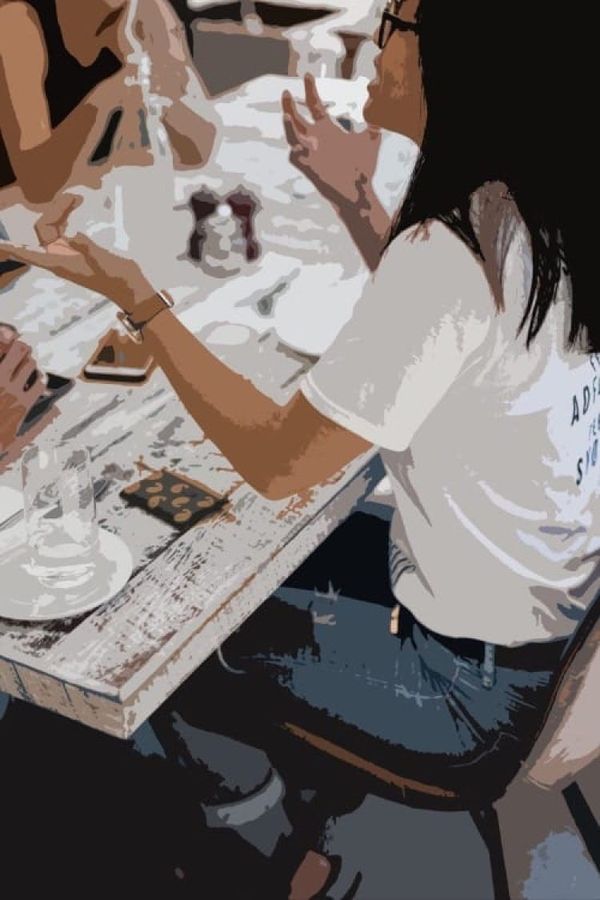
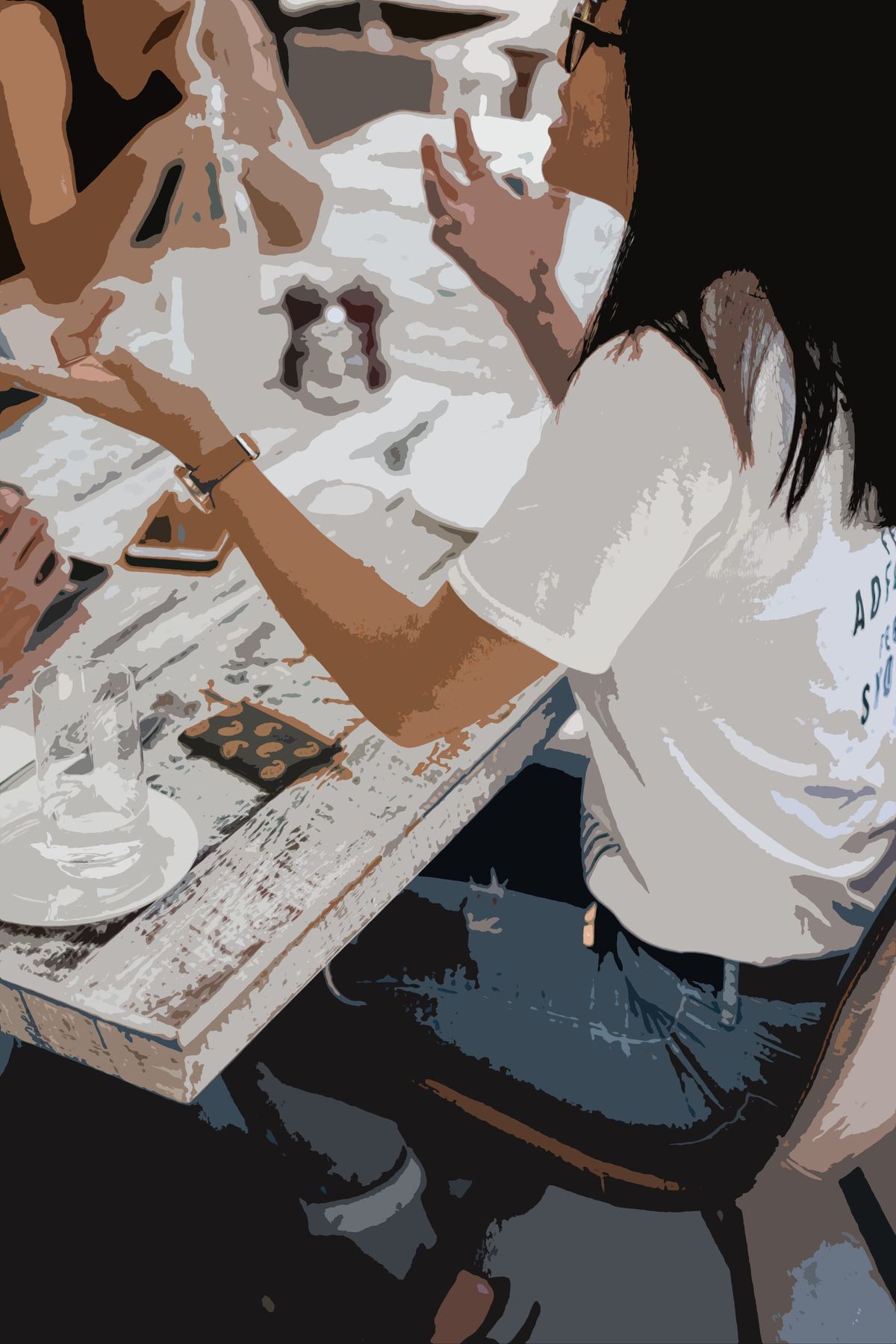
When we slip into a role, on some level, we create a fiction. When we do so together as a group, we create a shared fiction; often one with many layers which won't all entirely match or perfectly correspond. This happens through the use of language and communication, and with conversations that build upon each other. When we do this as a deliberate act of play then we are conversing to create a shared fiction together.
There we might leave things as a simple observation but let's look at some aspects in more detail.
The Dialog
For one, we can be conversing on a multitude of levels, from many different perspectives, and be creating fiction. Like, what comes to mind immediately, is to take the view of a fictitious person and actually speak for that person to another impersonated by another, as actors do (who, by definition, play roles). Yet, we also create fiction when we converse about such fictitious people; how they are acting, what they are experiencing, what they may be witnessing. We can do this through sparse, cold descriptions, or indulge in flowery language. We can also create fiction where we don't look at individuals but groups of people; we can be vague and fuzzy or make clear delineations when we do so. Reductive in a count of generalized individuals, or about what they did on a particular day in a particular green meadow. We can speak from their point of view, or from a perspective on them, and we can do all this in a wild blend, switching on the fly between all these modes. And all these different permutations create a different story.
In every specific instance, there is always a choice that is being made about which aspects receive attention and detail that will be relevant for the specific fiction we are creating. This focus can be on certain capabilities of those (groups of) characters, or on their sociological situation, or what is happening to them, etc. This choice very much influences the characteristics of our shared fiction.
Wherever it may be fantastical miniatures of spaceships on table tops that are being pushed around; or dolls meeting up for tea time; or someone only summoning goblins from their deck; or if we are taking turns inventing what journey to a distant continent a tomato, a turnip and a broccoli go on—all of these share that, in the moment of creation and perception, we are experiencing a very direct and personal encounter between all participants.
Personal Encounters
This personal meeting of minds comes into existence through the shared experiencing of how the fiction is created by us building on each others' process of creation: for being received is integral to this; witnessing how the other person is taking it in through their reflected reaction. May it be through concentrated listening, nonverbal responses in expression and gestures, and of course also in their consciously made answer to us, where we in turn turn into the recepient. Through this mutual reinforcement, our shared fiction in creation becomes its own external state of affairs, in that we have equity but that is neither alone our responsibility, nor at our sole disposal. It becomes an amalgamation of exchange, where our own contributions become so enmeshed with those of others that they become inseparable.
The intimacy of such an encounter, when creation of a shared fiction comes into being, is considerable.
What's quite noteworthy—as touched upon already above—is how many different forms such conversations for creating shared fiction can take.
Though, those form which may be labelled "professional" are to be set aside, here—not because the following doesn't apply but because in such professionalized nature there inevitably are rigid measures that functionally are designed to prevent intimacy: news headlines, written by humans, also use many narrative techniques; as do all those entertainment products like movies and tv that we almost immediately are prone to think of—but all that makes those things products also ensures that we do not have personal encounters with the editor, the actress, the director, not even with the comedian who interacts with their audience on a stage, intimate. They are all parasocial relationships, at the end of the day.
So, let's put those aside, while conscious that many similar dynamics will also be at work there—yet, this here is supposed to be a look at the most immediate and fundamental nature of this activity of shared fiction creation, and not the second or third derivative thereof.
The focus is on the personal encounter, and how it comes into expression through the act of roleplaying. Hence, we also put aside all those games in which the creation of fiction only plays a subordinate role: indeed, narratives can also be read into x provides cover for B5, threatens D5 and E4 but for the players (and their personal encounter which is more driven through a nature of sports) creating such shared fiction will likely not have much relevance.
The Conversation
Which ways of exchange exist that do put a high priority on shared fiction?
We already touched upon using direct speech while individual players embody fictional characters; similarly dressing as, moving and acting like their characters, in spatial relations to their fellow players but also using abstracted code phrases and actions, like the use of key words, to convey meta information smoothly (as found in different LARP-forms) are further forms along the same lines.
Others can be, the use of intricate game systems to make the fiction center on complex dynamics while making them be accessible and playable (tactical- and strategic-minded game systems where their bookkeeping gives fiction a certain texture that would otherwise be unachievable). In this case, maybe broad parts of the conversation (that is creating the fiction) are being held very similarly to how they would be in a board game or abstract card game (and may even be a form of them). For an outside observer it may not be obvious how central the creation of a fiction is: more of than not, competing parties there are not operating on a balanced playing field, as a sporting competition would require.
In part contrasting (90's so called "trad" games with shelved full of supplements), in part very enmeshed (miniature games in fantastical worlds), a high information density through tons of detail description can serve players as a common language that forms the basis for the creation of a shared fiction—that often go hand-in-hand with narrative perspectives that are not neutral but at the same time also not analogous embodiments by the players.
Rather a conversation that may resemble more how we imagine the writers' room of a tv show: we talk about characters, about the situations they find themselves in, their opportunities of taking action; we consider and speculate on possible plot twists; which consequences which courses of actions or this and that decisions may have. And then we make those decisions together.
And all those ways of having conversations are in flux—as even for those latter ones exist game systems that promote authorial or dramaturgical perspectives. Or you have specialized techniques in LARP that allow insight to the inner lives of characters.
At the same time, these forms can also flow into each other; making decisions in third person about the actions of a group of characters, embellishing with an exclamation in first person for one individual of the group and in the next moment having a discussion on how to divvy up some game resource among the characters, and pontificating on the how and why of the passage of events—in each and every step the shared fiction is spun further.
Collective Experience By Way of Shared Expectations
The diversity of possibilities, how we can have conversations for creating fiction—before even considering specific contents!—is one of the main drivers why there are infinite discussion on what True Roleplay™️ is. This is the discourse. If this is unfamiliar and you still read this far... Welcome! You're in the middle of it ;-)
At the end of the day, it's more "true" when there is high alignment of expectations between all involved. And key for that is to stay open and curious what forms roleplaying can take, beyond those already familiar, and to be excited for new ways to have such special, personal encounters!